So, you want to complete a supply chain qualification. But did you know you may be eligible for funding? This means either the Queensland state government or industry incentives pay for your supply chain certificate. But how do you access that?
In this guide, you’ll find the two Queensland programs that fund supply chain study, who qualifies for funding, which supply chain qualifications you can do with this funding, and the support open to Queensland businesses.
Is Government Funded Supply Chain QLD Training Available?
Government-funded supply chain QLD training exists through two state programs:
- Career Start for entry-level study and job seekers.
- Career Boost for higher-level study.
Through these, you could undertake an apprenticeship or traineeship, which lets you study while you work, and you actually get paid to learn!
This table sums up what funding options are available for supply chain courses in QLD, alongside example qualifications and levels:
| Programme | Qualification level | Major course |
|---|---|---|
| Career Start, entry level | Certificate II | Certificate II in Supply Chain Operations |
| Career Start, general training | Certificate III | Certificate III in Supply Chain Operations |
| Career Start, traineeship | Certificate III | Certificate III in Supply Chain Operations (employed) |
| Career Boost | Certificate IV and above | Certificate IV in Supply Chain Operations |
What does the Queensland Government pay for?
The Queensland Government pays part of the course cost straight to an approved training provider. You pay the rest as a co-contribution fee, and the provider sets it, so prices vary and it pays to compare.
Your provider must be a government-approved Skills Assure Supplier, and the Queensland Skills Gateway lists funded courses. Transport and logistics isn’t on the industry list for Free Apprenticeships for Under 25s, so expect a co-contribution fee.
Who is Eligible for Career Start and Career Boost in QLD?
Career Start funding is aimed at school leavers and job seekers beginning their careers. Career Boost, meanwhile, is for workers mid-career looking to push on for promotions or upskill. Two rules matter most when it comes to eligibility criteria: you can’t have completed a certificate III or above in the past decade, and you must also not be doing another funded qualification.
Career Start eligibility
Career Start has separate rules for general training and for traineeships.
For general training, you must be 15 or older, no longer in school, and permanently living in Queensland. You also need to be an Australian or New Zealand citizen, a permanent resident, or a temporary resident with an eligible visa.
You’re not eligible if you’ve completed a certificate III or higher in the last 10 years, or if you’re enrolled in another qualification funded by the Department of Trade, Employment and Training (DTET). School qualifications and foundation skills don’t count towards that rule, and some funded courses add entry requirements from national training package guidelines.
For a traineeship, you must be working as a Queensland trainee under a registered training contract, with a visa that allows work in Australia if you’re from overseas. You also can’t have completed two apprenticeships or traineeships in the last 10 years.
Career Boost eligibility
Career Boost is about developing higher-level skills at Certificate IV level and above.
You can access one funded qualification, either a diploma, an advanced diploma, or a certificate IV through general training, or a higher-level apprenticeship or traineeship at certificate IV or above. You can add up to two funded skill sets, which are short groups of units. The 10-year look-back here covers a certificate IV or above, university study included.
Which Government-Funded Supply Chain Qualifications Can You Get in QLD?
Explore your options in transport and logistics with these supply chain qualifications. Pick the one that matches where you are now.
Certificate II for entry-level starts
Certificate II in Supply Chain Operations (TLI20421) is the entry point into logistics.
Major can deliver it to VET in Schools (VETiS) students and to community organisations under the Skilling Queenslanders for Work initiative. Career Start and VET in Schools are the funding programs.
Delivery covers Gold Coast, Dinmore, Morayfield, and employer sites, with fees and availability on request.
Certificate III for working learners
Certificate III in Supply Chain Operations (TLI30325) is for people working, or aiming to work, in logistics, warehousing, and supply chain. Once you complete it, you hold a nationally recognised qualification.
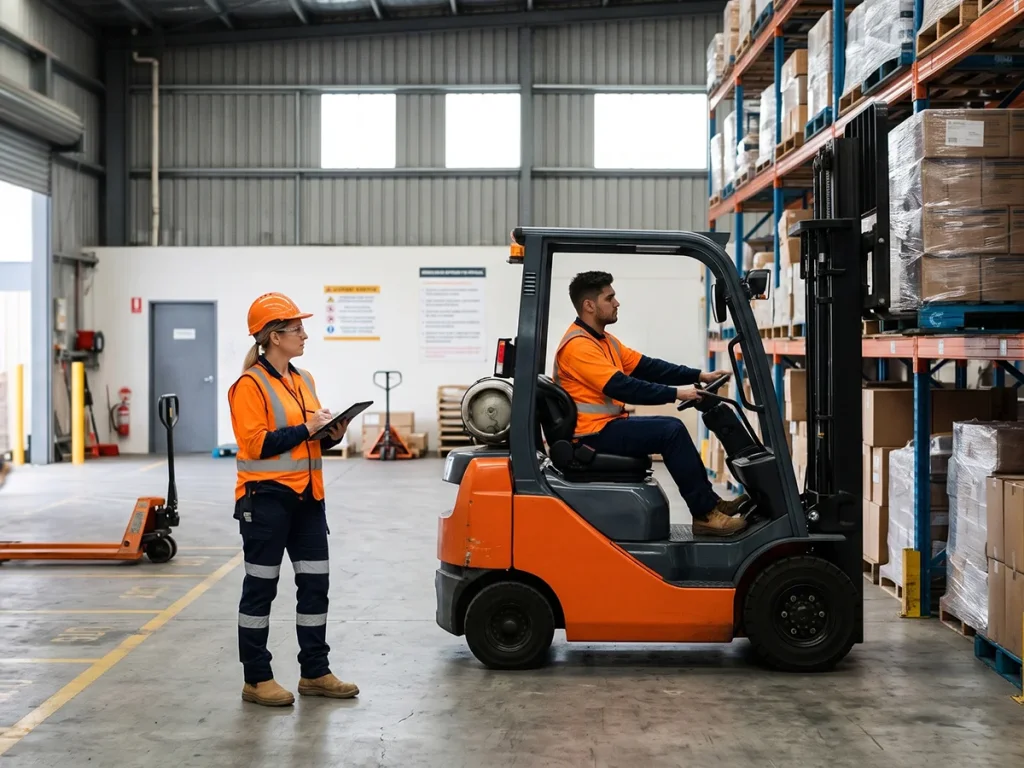
There are no formal entry requirements. Units cover a range of warehouse and freight tasks, including manual handling, loading cargo, and operating equipment such as an elevating work platform. Graduates go on to roles such as warehouse operator, freight handler, and rail terminal operator.
You can study self-paced or as a traineeship, a commitment of up to 24 months that needs you to be employed.
Eligible students can use Career Start general training or the Career Start traineeship. Locations include Gold Coast, Dinmore, Morayfield, Cairns, and your own workplace, where Major tailors delivery to your team. Fees are on enquiry.
Certificate IV for supervisors
Certificate IV in Supply Chain Operations (TLI40324) suits people in, or moving into, supervisory roles.
Career Boost funds this qualification, and there are no specific entry requirements. Units cover monitoring a supply chain operation, implementing logistics processes, monitoring supplier performance, organising freight, and managing a fatigue risk management system.
It’s delivered at the same facilities as the Certificate III, and it’s also available online. Support includes extra practical sessions and one-on-one help from trainers, and the course lays a foundation for career growth and development.
What does the Supply Chain Job Market in QLD Look Like?
Queensland is a hub for supply chain activity, since it’s home to some of the country’s biggest ports, airports, manufacturing plants, and warehouses, and there is great infrastructure and investment in the state.
The Crisafulli Government’s Queensland Freight Delivery Plan 2026, released on 11 September 2026, sets out 70 actions over five years to improve freight access, connectivity, resilience, and efficiency. Resilience matters because one bottleneck can expose supply chain vulnerabilities.
How do major projects like Brisbane 2032 affect freight demand?
The Government projects that Queensland’s freight task will grow by 20 per cent by 2032. It names population growth, increased agricultural production, expanding critical minerals industries, global trade opportunities, and the Brisbane 2032 Olympic and Paralympic Games as the drivers. The plan also aims to reduce supply chain bottlenecks, and roles such as inventory controller and warehouse supervisor sit at the Certificate IV level.
What Support Exists for Queensland Businesses and Suppliers?
Course funding and business support are separate things. Companies and other organisations that supply government can use the programs below, which come from Business Queensland. None of them pays for a student’s course.
How do local businesses win government work?
Under the Queensland Procurement Policy 2026, government buyers across agencies must invite at least one local supplier, small and family business, or Queensland regional business to respond to every routine quote or tender for goods and services, unless that’s impractical. Buyers also weigh quality, supplier capability, and risk management alongside cost, so local businesses can compete on more than price and still submit a competitive bid.
You can create a free supplier profile on the Supplier portal, then use the Forward Procurement Pipeline to prepare for future work, which builds your tender readiness. A Supplier Roadshow series is also planned for 2026, in partnership with key government agencies.
How does the Industry Capability Network help?
ICN Queensland makes the connection between local businesses and supply chain opportunities on major infrastructure projects and resource projects, matching them to work that suits their capabilities.
Building capability in your own team
Employers can build capability from the inside, and investing in a trainee strengthens your team. A Career Start traineeship lets you train a worker on the job, and Major’s advisors can assist with which federal incentives apply.
Government Funded Supply Chain Training FAQs
What types of free government grants are available in Queensland?
For training, the Queensland Government pays a subsidy to the provider rather than giving individuals a grant, and its free programs are narrow: Free Apprenticeships for Under 25s, Free Nursing, Fee-Free TAFE, and a construction apprenticeship program for over-25s. Businesses can search the Queensland Government Grants Finder.
What government-funded courses are available in Queensland?
Career Start also funds trades and other Certificate III apprenticeships, and Career Boost funds diplomas such as Leadership and Management. Construction Skills Queensland, Manufacturing Skills Queensland ($300 co-contribution for Queensland manufacturers), and the BERT Training Fund are industry funds, not government.
What are the four types of supply chains?
Supply chain training doesn’t organise itself around four types. A course teaches the functions inside any supply chain instead, from procurement and inventory through transport and dispatch.
Get Supply Chain Funding Today
Major Training offers supply chain qualifications at certificate II, III, and IV level, and eligible students can access funding through Career Start or Career Boost.
Major’s advisors will assist with your situation and explain which funding option fits. You can also phone 1300 790 822 to talk it through.
Contact Major Training to check your funding options today.

Check What Funding You Qualify For
Funding rules depend on your past study and work situation. Major’s course advisors can identify which program fits, so you can enrol with confidence.