Thinking of leaving school or need a career change? Then boilermaking is definitely worth a look. It’s a pretty practical way into the construction, manufacturing, mining, and engineering sectors here in Australia.
Boilermakers get to use their hands, along with a bit of technical know-how, to create, build, fix, and maintain metals. They use drawings and special tools. They also rely on welding techniques. If you enjoy getting your hands dirty and figuring out problems, then this is probably the job for you. It also allows you to see the end result of your work.
This guide will walk you through the process of becoming a boilermaker in Australia. It covers school requirements, apprentice routes, and the all-important Certificate III in Engineering (Fabrication Trade). It also includes all the other essentials like welding skills, OH&S tickets, on-the-job training, qualification requirements, and earning potential. You might be just starting out in the workforce or wanting to make a switch from a different industry. We’ll cover the key steps to get you qualified and gain some valuable experience. Then, you can start building a solid boilermaking career.
What do Boilermakers Actually Do in the Fabrication Trade?
Boilermakers are the ones who fabricate and assemble metal structures. They also repair them. This role has gone way beyond just boilers to cover structural steel, heavy machinery, industrial plants, and loads of other metal products these days.
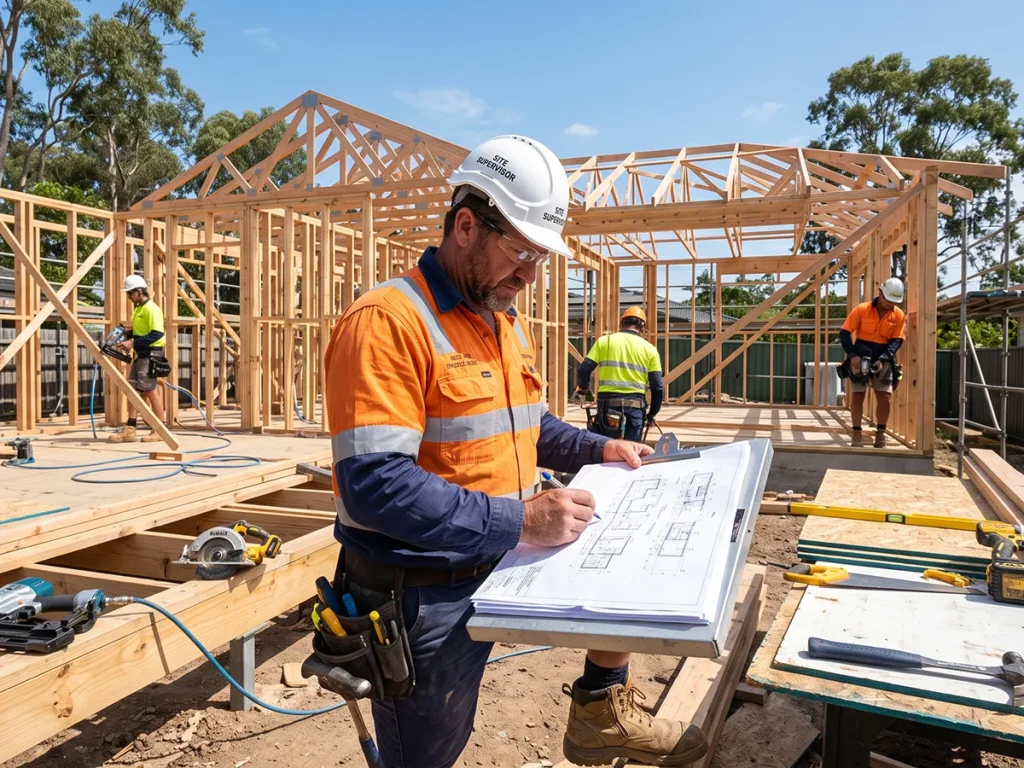
Boilermakers spend most of their time wading through engineering drawings and specifications. They get to read through the engineering blueprints and technical drawings again and again, and turn all those precise dimensions into safe, long-lasting components.
A Day in the Life – Metal Fabrication Jobs
You’d think boilermakers spend all their time staring at technical drawings. The reality is they interpret them and do the engineering measurements. Then, they mark out and cut steel plate and tubing with a high degree of precision.
They work with all sorts of tools: hand tools, power tools, thermal-cutting equipment, and even computer-controlled machines. They do all their welding and thermal cutting work either on-site or in workshops. This depends on what’s needed.
Boilermakers also do a fair bit of repair and maintenance on metal products as well. Before they pass on finished jobs, they do an inspection to check for dimensional accuracy, weld quality, compliance, and integrity.
Some of the things Boilermakers do on a regular basis:
- Fabricating structural steel and heavy structural steel components.
- Building steel bridge supports, storage tanks, and pressure vessels.
- Making pipework, steel structures, and distillation columns.
- Doing all the structural welding and thermal cutting.
- Doing routine maintenance on plant and heavy machinery.
Where do Boilermakers Work – Construction, Mining and Manufacturing Sites
Boilermakers are a common sight on construction sites, in workshops, and processing facilities. They work for companies in the construction, manufacturing, and mining industries. They also work in oil and gas, power generation, and shipbuilding. They really are everywhere.
There’s a lot of demand in the resources sector, especially up in Queensland and Western Australia, which can mean finding yourself working on a remote roster, with all the safety procedures that come with it, and long hours to boot.
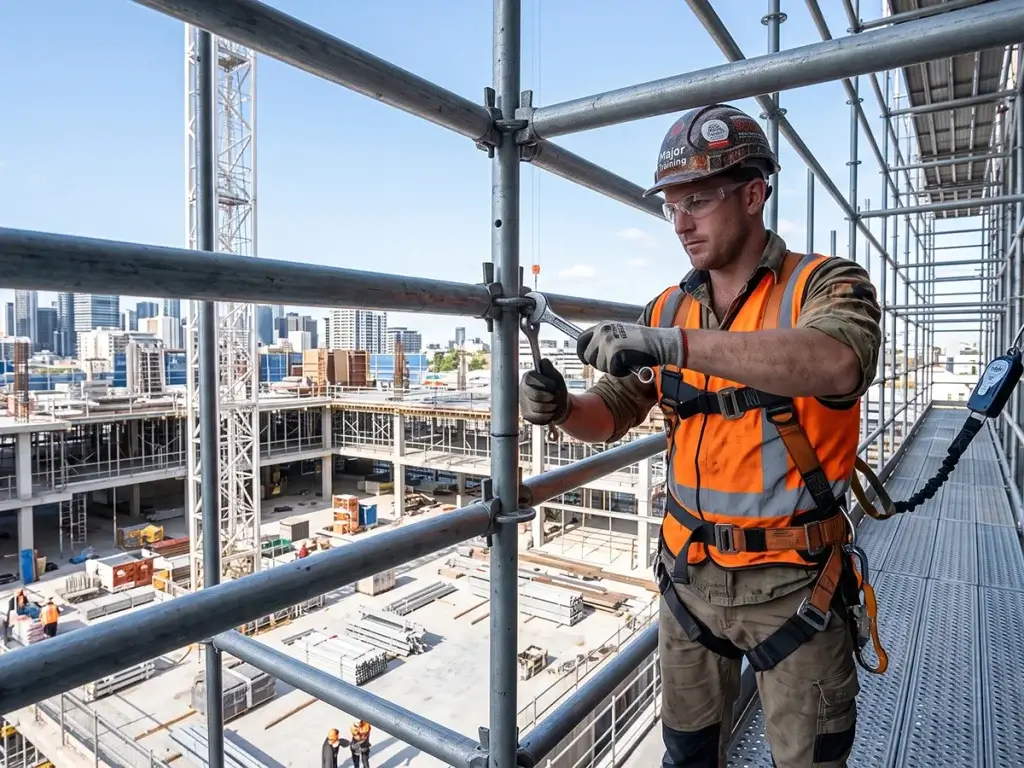
It’s a trade that’s all about getting your hands dirty. Be prepared to lift heavy stuff, stand for hours on end, work at heights, and handle heavy steel (sometimes in cramped spaces).
Getting Started: How to Become a Boilermaker
Career progression as a boilermaker usually runs from a school leaver or pre-apprenticeship, right through to a trade-qualified boilermaker.
- First off, complete year 10. Employers need to see you with some basic English, maths, and technical drawing skills under your belt.
- Find an employer who’s willing to take you on. Apply for a boilermaker apprentice position and agree to a training contract that will keep you on track.
- Work out which RTO is best for you: Get enrolled in the Certificate III boilermaker qualification through a registered training organisation.
- Get out there and get some on-the-job experience. Develop your practical skills while plugging away at the required units and do it all in the workplace.
- Get over the finish line. Show that you’ve got the skills, and you’ll be handed your nationally recognised trade qualification.
Step 1: Meet The Basic Entry Requirements
Most employers will prefer you to have at least a year 10 qualification with passes in English and Maths, and some other useful skills like mechanical aptitude and blueprint reading wouldn’t go amiss.
You’ll need to be at least 15 years old to start an apprenticeship, but you can start a boilermaker apprenticeship at any age after that, although entry requirements do vary depending on the employer and location.
A current driving licence isn’t a requirement for the course, but a lot of employers will want it, so you can get to and from the site without a problem. Being fit and reliable are big pluses. Having an interest in engineering also helps.
Step 2: Find a Boilermaker Apprenticeship
Getting on this path is dependent on landing a good apprenticeship with a structured program. You’ll need to do some digging to find an employer that will take on an apprentice, or just talk to Major’s apprenticeships and traineeships team, and they’ll be happy to guide you through the process.
An apprenticeship does exactly what it says on the tin: you get a job with a decent income, and on top of that, you get to do some study through an employer-apprentice training contract.
Step 3: Enrol With a Registered Training Organisation
Once you’re employed, you’ll need to get yourself enrolled in that Certificate III. The RTO (training organisation) will then be looking after your assessment while you get up to your neck in real fabrication work.
If you’re an Aussie citizen or permanent resident, you might be eligible for funding, but it depends on a few things, like your age, how long you’ve lived here, whether or not you’ve done any learning already, and what program you’re trying to do.
Step 4: Complete On-the-Job and Off-the-Job Training
On-the-job training is all about getting that practical experience and developing your judgment and safe habits. Off-the-job training covers the theory behind it all: fabrication techniques, welding processes, drawings, measurements, quality control, and similar concepts.
You’ll get to work with real materials and learn to do it all safely while building up your hands-on experience and technical education. And that’s what makes a qualified boilermaker.
Step 5: Become a Trade-Qualified Boilermaker
Finishing your training does not automatically make you qualified. Your assessor still needs to review your work and check your evidence. They must also make sure you understand the trade. Once every required competency has been signed off, you can receive your nationally recognised qualification.
Already worked in metal fabrication? You may be eligible for recognition of prior learning. RPL can save you from repeating skills you have already mastered, but you will need evidence for every claim. Ask your RTO what documents and work samples it accepts. Employer records are also required.
Boilermaker Qualifications and Training
Most new boilermakers follow the same route. They complete a Certificate III in Engineering Fabrication Trade while working as an apprentice.
The two parts support each other. Formal training teaches you why a task is done in a particular way. Your apprenticeship gives you time to practise it on real jobs.
Certificate III in Engineering Fabrication Trade
Major Training offers the MEM31925 Certificate III in Engineering Fabrication Trade. You can choose a boilermaking stream or combine boilermaking with welding.
The qualification has a nominal duration of 48 months. Much of that time is spent working and collecting evidence, rather than sitting in a classroom. You will learn about structural steel, metal fabrication, welding, and the steps involved in turning a technical drawing into a finished component.
MEM31925 replaced MEM31922 in September 2025. If you started under the older course, speak with your RTO. It can explain which completed units still count and whether your training plan needs to change.
On-the-Job Training and Hands-On Experience
Some lessons make more sense once you see them happen. Steel can shift as it heats and cools. A machine setting that worked for one job may not suit the next. Drawings also need to be read carefully before any material is cut.
Your employer helps you develop judgment around these everyday problems. RTO training gives you the technical knowledge behind them. Both matter if you want to work safely and produce accurate results.
Core Units, Engineering Measurements, and Safety
Boilermaking involves much more than welding. Core units cover workplace communication, calculations, engineering measurements, and safe work practices.
You will also learn how to choose materials, control waste, meet quality requirements, and compare finished work with drawings and specifications. Elective units allow your training to reflect the type of fabrication work you do.
Welding Processes and Advanced Welding Techniques
No welding process suits every job. The right choice depends on the material, its thickness, the joint, and the conditions around the work.
- Gas metal arc welding (MIG): MIG is common in fabrication workshops because it supports steady production. Apprentices learn metal preparation, equipment setup, consumable selection, and defect control.
- Flux core arc welding: This process is often used for structural fabrication and outdoor work. It may also appear in advanced welding training.
- Gas tungsten arc welding (TIG): TIG offers greater control when a job requires a clean and precise weld. It can be useful for detailed work where appearance and accuracy matter.
- Pressure welding and pipe welding: These jobs require careful fit-up and proper penetration. Close inspection is also required. Small errors can affect the finished result.
- Welding certifications: A trade qualification does not certify you for every welding procedure. Coded and pressure work may require separate certification. Critical structural work also has this requirement.
- Advanced welding techniques: Further training can lead to more specialised work. Underwater welding also requires diving qualifications and specialist instruction. Medical clearance is also mandatory.
How Long Does a Boilermaker Apprenticeship Take?
A boilermaker apprenticeship usually takes four years. Major lists a nominal term of 48 months, combining paid employment, RTO training, workplace evidence, and assessment.
The exact timing can vary. A part-time apprentice will usually need longer, while previous experience may reduce some training requirements. Every competency must still be demonstrated before the qualification can be awarded.
Boilermaker Salary and Apprentice Award Wages in Australia
Pay depends on the job. A workshop position and a remote shutdown role may come with very different wages and hours. Allowances also vary significantly.
Reported figures place qualified boilermaker earnings at around $95,000 to $115,000 a year. Mining and shutdown positions may pay between $100,000 and $120,000. Specialist roles fall into this range too. Your location, roster, overtime, and extra qualifications can all affect the final amount.
Apprentice pay works differently. The Manufacturing and Associated Industries and Occupations Award may apply, although some workplaces use an enterprise agreement or another award.
Older published figures placed apprentice wages between $500 and more than $980 a week. In July 2025, Major listed a weekly rate of $534.20 for a junior first-year apprentice who had not completed Year 12.
The current Manufacturing Award table lists junior apprentice rates from $559.55 to $1,029.10 a week across the relevant stages. Adult apprentice rates range from $895.28 to $1,029.10 before allowances and penalties. Overtime will increase this. Rates can change, so check the latest table and the agreement covering your workplace
Licences, White Card, and Site Safety Certifications
Australia does not have one nationwide boilermaker licence. The tickets you need depend on the site, the equipment, and the work you perform.
- White Card: You need a White Card before working on a construction site. Major offers a Construction Induction Card course. WorkSafe Queensland also explains the construction induction requirements that apply in Queensland.
- Other site tickets: Some employers require Working Safely at Heights training, Confined Spaces training, or an EWP ticket. Mine sites may add their own inductions and competency checks.
- Welding safety: Welding can expose you to fumes, radiation, sparks, heat, and fire. Follow the hot work permit, use suitable ventilation and PPE, and stick to the site’s safety procedures. WorkSafe Queensland provides practical welding safety guidance for managing these risks.
Boilermaker Jobs and Career Opportunities
Workshop work is only one option. Boilermakers also work on construction projects, industrial sites, mine sites, and planned shutdowns. With experience, you could move into field fabrication, pressure welding, inspection, team leadership, or site supervision.
The trade is used across manufacturing, infrastructure, shipbuilding, construction, maintenance, and resources projects. Wherever large metal components need to be fabricated or repaired, boilermaking skills may be needed.
An older forecast estimated around 47,000 openings over five years for the broader structural steel and welding trades group. That number was not limited to boilermakers, and it is not a current forecast. Treat it as general industry information.
Mining work gets plenty of attention, particularly in Queensland and Western Australia. The pay can be appealing, but the working arrangements will not suit everyone. Remote sites may involve long shifts and camp accommodation. You also need to prepare for extended periods away from home.
Ready to Start Your Boilermaking Career?
Think boilermaking might suit you? Start by finding an employer who can support your apprenticeship.
Major Training provides employer-supported apprenticeship training at Gold Coast, Dinmore, Morayfield, Cairns, and Beresfield.
Call 1300 790 822 to discuss entry requirements, course streams, and available training.
Frequently Asked Questions
Is a Boilermaker the Same as a Welder?
No. Welding is a major part of boilermaking, but the trade covers more than joining metal. Boilermakers also read drawings, mark out materials, shape steel, assemble components, and inspect finished work. A welder may focus mainly on the welding process.
What Qualifications Do You Need to Become a Boilermaker?
Most new starters complete the MEM31925 Certificate III in Engineering Fabrication Trade through an apprenticeship. The course combines workplace experience and formal training. Ongoing assessment is also required.
Can You Become a Boilermaker Without an Apprenticeship?
An apprenticeship is the usual choice if you are new to the trade. Experienced fabrication workers may qualify through RPL or formal trade recognition. They must still provide evidence that their skills meet every requirement.
How Much Does a Qualified Boilermaker Earn?
Reported earnings commonly sit between $95,000 and $115,000 a year. Remote work, shutdowns, overtime, allowances, and specialist welding qualifications can increase the total.
Is Boilermaking Physically Demanding?
Yes. The work can involve lifting, standing for long periods, working around heat and noise, and accessing confined or elevated areas. Fitness helps, but safe technique and concentration are just as important. Mechanical awareness is also vital..
Learn More and Build Your Trade Career
Still comparing your options? Read these articles:

Become a Boilermaker Today
Learn boilermaker skills while getting paid with an engineering apprenticeship. Funding options available for eligible students in QLD and NSW.