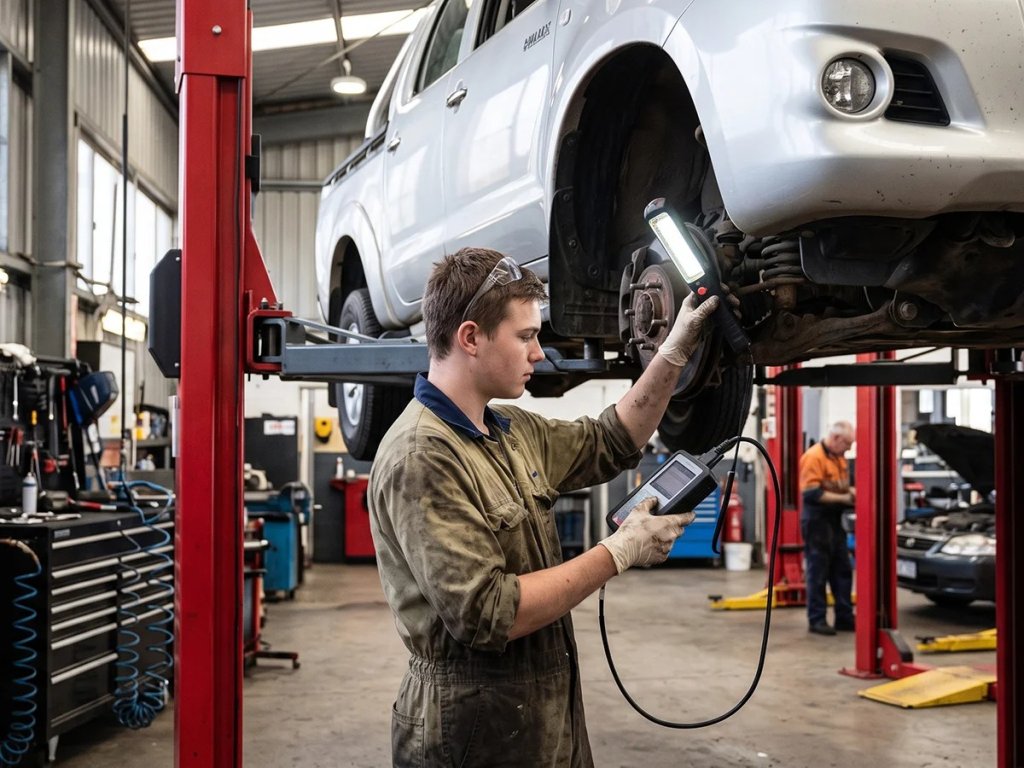
When a car starts behaving oddly, a mechanic works out what is wrong. The clues might be a warning light, an unfamiliar noise, or a driver saying, “Something doesn’t feel right.” The mechanic follows those clues and diagnoses the fault. Then, they complete the repair and check that the vehicle is roadworthy.
The work’s a lot more varied than just tinkering with engines. One day you might be checking over the brakes, steering, and aircon. The next day it could be replacing a worn-out suspension component or trying to track down an electrical glitch using specialist diagnostic gear. It’s a trade that suits people who enjoy getting their hands dirty, are happy to spend time problem-solving, and get a real kick out of fixing something properly.
In Australia, most mechanics start out through an apprenticeship and go on to complete a nationally accredited qualification, such as a Certificate III in Light Vehicle Mechanical Technology with Major Training. Apprentices get loads of hands-on workshop experience while also getting through their structured training.
This guide is all about how to become a mechanic in Australia. We cover entry requirements, how long an apprenticeship takes, the practical skills you’ll pick up, the licences you’ll need, what kind of pay you can expect, and where a career in mechanics can take you.
What Does a Mechanic Do in the Automotive Industry?
In an automotive workplace, a mechanic may service light vehicles, find faults, complete automotive repair work, and explain the result to customers. The exact duties vary depending on the workshop, vehicle type, and the mechanic’s qualifications.
Common tasks include:
- Speaking with customers, checking service records, and test-driving cars.
- Using diagnostic tools to test engines, batteries, and electric systems.
- Inspecting car parts and removing worn and defective parts.
- Repairing or replacing defective parts, then testing the repair.
- Servicing brakes, steering, suspension, cooling, and fuel systems.
- Keeping tools, equipment, and the work area safe and organised.
The job needs technical skills, attention to detail, and strong problem-solving skills. A skilled mechanic also needs clear communication. Customers want an honest explanation of what’s wrong, what the service involves, and what it’ll cost.
Steps: How to Become a Mechanic in Australia
Becoming a qualified mechanic in Australia usually follows a vocational education and training pathway. The automotive repair industry relies heavily on formal training and apprenticeships, so securing an automotive apprenticeship is essential for the standard pathway to becoming a qualified motor mechanic.
- Complete Year 10. Aim to complete Year 10 of high school education before applying. Major’s AUR30620 course has no formal entry requirements, but many employers expect Year 10-level English, maths, and basic tech knowledge.
- Build foundational skills. A Certificate II in Automotive Vocational Preparation is an entry-level course. You could also complete a Certificate II in Automotive Servicing Technology. Pre-apprenticeship programs aren’t compulsory, but a pre-apprenticeship can provide basic mechanical knowledge and help you kickstart your career.
- Find an employer and apprenticeship. Apply to dealerships, independent workshops, fleet operators and the automotive retail sector. Major’s guide to getting an apprenticeship in Queensland can help you prepare.
- Complete a vocational education and training program. For cars and other light vehicles, complete a Certificate III in Light Vehicle Mechanical Technology through a registered training organisation while working.
- Finish the apprenticeship and keep learning. Once you’ve demonstrated the required competencies, you’ll receive a nationally recognised qualification and can work as a qualified mechanic. Ongoing training is recommended so you can keep up with electric vehicles, software, and new automotive technology.
Qualifications and Light Vehicle Mechanical Technology Training
The main light vehicle mechanical pathway is AUR30620 Certificate III in Light Vehicle Mechanical Technology. The Certificate III combines structured study with paid employment, allowing you to gain industry experience while learning in a real automotive workplace.
You’ll gain hands-on experience using workshop tools and equipment to inspect, diagnose, service, and repair engines, transmissions, brakes, steering, and suspension. Training also develops the knowledge and problem-solving needed across the automotive retail, service, and repair industry.
If you’re searching for “Certificate III in light vehicle” or “III in light vehicle mechanical technology”, AUR30620 is the full qualification name. It’s designed to give you the right qualifications for light vehicle mechanical work, rather than heavy trucks or mobile plants.
Want to work on larger vehicles? The Certificate III in Heavy Commercial Vehicle Mechanical Technology covers heavy commercial vehicle mechanical systems. This Certificate III in heavy commercial pathway prepares heavy vehicle mechanics for trucks, buses and other large transport vehicles.
Further qualifications can open specialist career opportunities. A Certificate IV in Automotive Mechanical Diagnosis builds advanced automotive mechanical diagnosis skills. You can also move into diesel technology, automotive electrical systems, or safe work on electric vehicles.
Explore Major’s full range of automotive training pathways before choosing a course.
How Long Does It Take to Become a Qualified Mechanic?
A mechanic apprenticeship typically lasts 3 to 4 years. Major lists a nominal 48-month term for its light vehicle apprenticeship, although the time needed to complete it can vary depending on competency progress, prior industry experience, and whether employment is full-time, part-time, or school-based.
You’ll work and train at the same time. That means you’re building practical knowledge from day one instead of waiting until the end of a classroom-only course.
Mechanic Salary in Australia
Apprentice and qualified worker salaries are paid differently:
- Apprentice mechanic: Major’s apprenticeship wage guide lists about 14-17 per hour for a first-year automotive or heavy vehicle apprentice—roughly 28,000-34,000 a year at 38 hours a week. Actual award pay varies by age, school completion, apprenticeship year and agreement.
- Qualified mechanic: Mechanics in Australia commonly earn around 52,000-86,000 annually, while experienced or specialist roles can reach about $90,000. Jobs and Skills Australia reports median full-time earnings of $1,622 a week, or about $84,300 a year.
Salary can vary depending on location, qualifications, overtime, specialisation, and industry demand. Australia has around 112,600 motor mechanics in employment, and demand remains high for people with current diagnostic and electrical skills.
Licences, Permits and Tickets You’ll Need
Australia doesn’t have one nationwide trade licence for general mechanical work, and most states don’t require a general licence simply to work as a mechanic. However, state-based licensing requirements can vary significantly, particularly for repair businesses and specialised work.
Keep these points in mind:
- A driver’s licence is often required so mechanics can legally test-drive vehicles after repairs.
- Roadworthy inspections may require local permits. In Queensland, you need Department of Transport and Main Roads approved examiner accreditation to issue relevant inspection certificates.
- Specialised certifications are needed for jobs such as automotive air conditioning servicing or LPG installations. See Major’s information on Refrigerant Handling Licence training.
- Electric and hybrid work calls for task-specific competence and safe systems. WorkSafe Queensland’s electric vehicle guidance stresses suitable training for electrical risks.
- A White Card, high-risk ticket or verification of competency may be required when you service vehicles or equipment on certain construction, civil or mining sites; they aren’t standard requirements for every workshop.
Ready to Start Your Mechanic Career?
Build practical skills and work towards a nationally recognised qualification with Major Training. A course adviser can explain apprenticeship training, funding and available locations across the Gold Coast, Dinmore, Morayfield, Cairns, and Beresfield.
Enquire about Certificate III in Light Vehicle Mechanical Technology
Career Opportunities for a Skilled Mechanic
With the right qualifications and industry experience, you can pursue a range of jobs:
- Light vehicle mechanics focus on cars and smaller automotive engines.
- Heavy commercial vehicle mechanics work on trucks, buses, and large transport vehicles.
- Automotive electrical specialists diagnose wiring, batteries, charging, and control systems.
- Automotive body repair specialists fix dents and replace damaged panels.
- Automotive air conditioning specialists maintain vehicle cooling systems.
- Engine reconditioning specialists repair and rebuild engines.
Further training can lead to diesel, electric vehicle, diagnostic, fleet, service-adviser, or workshop-management roles. Australian certifications may also support international work, although recognition, visas, and local licensing must be checked in the destination country.
Take the Next Step Towards Becoming a Mechanic
To become a mechanic, you’ll usually complete an apprenticeship while studying a nationally recognised automotive qualification. Major Training offers practical courses, including the Certificate III in Light Vehicle Mechanical Technology, to help you develop the hands-on skills needed to begin your career
Frequently Asked Questions
What qualifications do I need to become a mechanic in Australia?
For light vehicles, the usual route is an apprenticeship plus AUR30620 Certificate III in Light Vehicle Mechanical Technology. It provides the nationally recognised qualification generally expected for qualified light vehicle mechanical work.
How long is a mechanic apprenticeship in Australia?
Most apprenticeships take 3 to 4 years. Major’s AUR30620 apprenticeship has a nominal duration of 48 months, but competency-based progress and part-time arrangements can change the timeframe.
Can I become a mechanic without prior experience?
Yes. You can apply directly for an apprenticeship, though a Certificate II or pre-apprenticeship can provide foundational skills. This makes it easier to show employers your knowledge, passion, and readiness for hands-on work.
Does a mechanic need a licence in Australia?
There’s no single nationwide licence for general mechanic work. Requirements vary by state and task. Roadworthy inspections, air conditioning, LPG work, and some business activities need separate accreditation, permits, or licences.
Is being a mechanic a good career in Australia?
It can be a rewarding career if you enjoy working on vehicles, learning new tools, and solving practical problems. There’s high demand, broad job opportunities, and room to specialise as automotive technology changes.
Learn More About Automotive Careers

Ready to Become a Mechanic
Browse our nationally recognised mechanic courses, from entry-level Cert 2 and apprenticeships to specialised training and advanced courses.