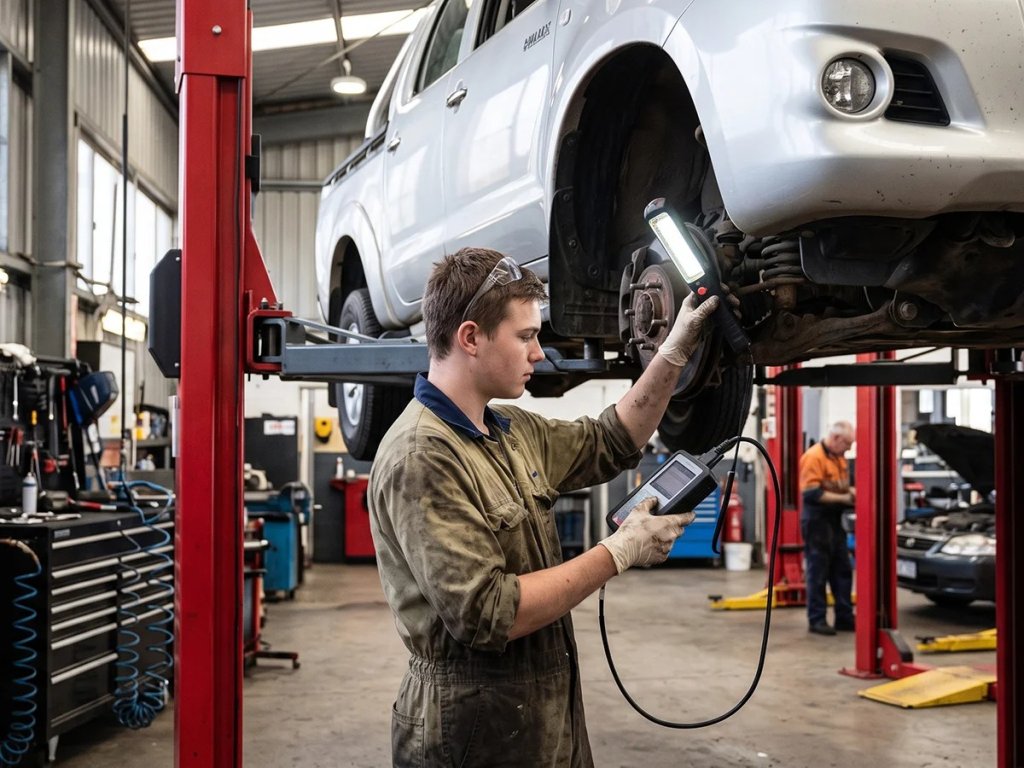
Ever popped the hood of a modern car and felt like you were staring at a high-powered supercomputer rather than a mechanical engine?
You wouldn’t be far off. Modern vehicles are packed with sophisticated digital systems, and finding out exactly what is causing an elusive fault takes a specialised type of mind.
That’s where auto electricians come in. They diagnose, repair, and maintain the electrical and electronic systems behind everything from starting and charging to vehicle safety and computer-controlled functions.
An automotive electrical apprenticeship is the standard pathway into the trade, combining formal training with hands-on experience in the workshop.
What Does an Auto Electrician Do?
Auto electricians are part mechanic, part detective, and increasingly part tech specialist. You’ll be the expert who installs, tests, maintains, and repairs the sophisticated, high-voltage electrical systems found in cars, heavy trucks, and other modern motor vehicles.
On the workshop floor, you’ll work with electrical wiring and electronic systems, batteries, charging systems, starting systems, lighting, and other electrical units.
Depending on the vehicle and your role, you could also find yourself working with electronic components in motor vehicles, braking systems, and vehicle control systems. The variety is part of the appeal: you aren’t simply doing the same repair over and over.
The real detective work starts when the problem isn’t obvious. Rather than replacing an expensive part and hoping you’ve found the culprit, you’ll use vehicle wiring schematics, testing equipment, and diagnostic tools to trace the fault back to its source.
You’ll need to understand how the different parts of the system work together, then decide whether the answer is to repair electrical wiring, replace an electrical unit, or look elsewhere for the problem.
What Skills Will You Learn as an Auto Electrician?
Nobody expects you to roll into your first week on the workshop floor knowing how to reprogram a vehicle’s central computer network. That’s what the apprenticeship is for. You’ll build the technical and practical skills you need over time, putting what you learn into practice as you become more confident with the tools.
Here are some of the skills you’ll develop along the way.
Reading Wiring Schematics
You can’t simply guess where a wire leads when it’s buried deep inside a vehicle’s dashboard. You’ll learn to read vehicle wiring schematics, understand how circuits and components connect, and eventually apply vehicle wiring schematics to trace faults and pinpoint where an electrical problem is coming from.
Repairing Electrical Systems
You’ll develop the skills to diagnose and repair automotive electrical systems, from basic electrical circuits and wiring through to more complex vehicle systems. That means testing components, identifying faults, and knowing when to replace electrical units that can no longer be repaired.
Using Diagnostic and Repair Equipment
Modern auto sparkies rely on far more than screwdrivers and socket sets. You’ll learn to use repair instruments and electrical testing equipment to measure circuits, check components, and narrow down what’s actually causing a fault.
Knowing your tools is part of the trade, too. You’ll learn how to use them properly, look after your equipment, and recognise when a reading doesn’t make sense.
Working With Electrical and Electronic Systems
Modern vehicles are a mix of traditional electrical systems and increasingly sophisticated electronics. Your training will introduce you to electrical and electronic assemblies, including wiring, batteries, charging systems, starting systems, and electronic control components.
Repairing Charging Systems
When a vehicle won’t charge properly, replacing the battery isn’t always the answer. You’ll learn how to test batteries, alternators, wiring, and related components to find where the fault starts, then repair charging systems when the problem can be fixed.
Problem-Solving and Fault Finding
This is where the detective work really comes in. A top-tier technician figures out precisely why a complex system is failing, rather than just blindly throwing expensive spare parts at the vehicle and hoping for the best.
You’ll develop a methodical approach to testing circuits, interpreting diagnostic results, and deciding whether something needs to be repaired, adjusted, or replaced.
If you’re still deciding between automotive electrical work and a more mechanical trade, our guide on How to Become a Diesel Mechanic in Australia can help you compare the two pathways.
What Kind of Work Does an Auto Electrician Do?
The exact work varies depending on where you work and the vehicles you service. On a typical day, you might:
- Test wiring and electrical circuits to find faults
- Repair basic electrical circuits and damaged wiring
- Diagnose and replace faulty electrical components
- Service braking systems where electrical or electronic controls are involved
- Test and replace batteries and charging components
- Replace defective alternators and other charging-system components
- Jump-start vehicles and diagnose why a vehicle isn’t starting
- Use diagnostic equipment to identify faults in electronic vehicle systems
Some jobs are straightforward. Others take a bit more digging. You might start with a vehicle that simply won’t start and work through the battery, starter, alternator, wiring, and other components before you find the actual cause.
Steps to Become an Auto Electrician in Australia
Nobody becomes a confident auto electrician overnight. The usual pathway is to find an automotive electrical apprenticeship, complete the Certificate III in Automotive Electrical Technology (AUR30320), and build your practical skills through supervised workplace training.
1. Find an Automotive Electrical Apprenticeship
Your journey starts with an employer and a formal apprenticeship. You’ll earn while you learn, combining workplace experience with formal training.
That combination is important. You aren’t just learning electrical theory in a classroom; you’re putting it into practice on real vehicles under supervision.
Look for employers such as automotive workshops, dealerships, auto electrical businesses, fleet operators, and specialist automotive companies. Where you train can shape the vehicles and electrical systems you get to work on, so it’s worth thinking beyond simply finding the first available position.
If you’re not sure where to start, our guide on How to Get an Apprenticeship in Queensland in 2026 covers the process of finding and applying for an apprenticeship.
2. Start Your Certificate III
Once your apprenticeship is underway, you’ll begin formal training through an RTO. The official trade qualification you will study is the Certificate III in Automotive Electrical Technology (AUR30320).
This is the current, nationally recognised qualification required to work legally within the automotive service and repair industry. Don’t panic if you don’t have previous experience.
The AUR30320 syllabus features zero formal national entry prerequisites, though individual RTO entry boards frequently enforce their own basic literacy and numeracy assessments to ensure you can calculate circuit resistance on day one.
3. Build Your Skills on the Job
This is where the theory meets the real vehicle. You’ll learn to diagnose faults, test circuits, repair wiring, and work with different automotive electrical systems while training under supervision.
And faults aren’t always obvious. You may need to work through a wiring schematic, test several components, and rule out possible causes before finding the real problem.
4. Complete the Qualification
AUR30320 contains 32 units: 21 core and 11 elective. The core units cover areas including electrical circuits, wiring systems, test equipment, batteries, charging and starting systems, engine management, electronic body management, and diagnostic testing.
Your electives can take you into areas such as hybrid and battery electric vehicles, electric braking systems, electronically controlled steering, and ADAS.
The vehicles aren’t standing still, and neither is the trade.
5. Keep Building Your Automotive Electrical Skills
Getting your Certificate III is a big milestone, but it’s not the end of the learning. Vehicle technology keeps changing, so qualified auto electricians need to stay comfortable with new diagnostic equipment and electronic systems.
If you move into hybrid or battery electric vehicles, you’ll also need the appropriate training for the systems you’re working with. AUR30320 includes relevant EV units among its electives.
Auto Electrician Qualifications & Training
The Certificate III in Automotive Electrical Technology (AUR30320) is the main trade qualification for becoming an auto electrician in Australia. It reflects the role of people who service, diagnose and repair electrical systems and components in vehicles.
The qualification has 32 units in total: 21 core and 11 elective units. The core units cover the foundation skills you’ll use throughout the trade, including:
- Automotive electrical circuits and wiring systems
- Electrical test equipment
- Vehicle lighting and wiring
- Wiring harnesses and looms
- Basic electrical circuits
- Spark and compression ignition engine management
- Batteries and charging systems
- Starting and ignition systems
- Electronic body management systems
- Diagnostic test strategies
The electives can take your training further into areas such as hybrid and battery electric vehicles, electric braking, electronically controlled steering and ADAS.
For an apprenticeship-based training option, you can check Major Training’s Certificate III in Automotive Electrical Technology for entry information, training details and available locations.
Major Training delivers the apprenticeship through training facilities at Gold Coast, Dinmore, Morayfield, Cairns and Beresfield.
How Long Does It Take to Become an Auto Electrician?
A full-time automotive electrical apprenticeship has a 48-month term, or four years. Four years might sound like a long time, but you won’t spend those four years sitting in a classroom.
Apprenticeships also generally begin with a 90-day probation period. Think of it as a chance for both sides to make sure the arrangement works before settling into the longer training commitment.
Your timeline can shift, too. Part-time or school-based arrangements may take longer, while gaps in training or changing employers can add time.
Auto Electrician Salary in Australia
Let’s talk about your back pocket. Auto electrical work can offer strong earning potential, but your eventual pay depends on experience, location, employer, and the type of vehicles and systems you’re working with.
Jobs and Skills Australia puts median full-time earnings for Automotive Electricians at $2,808 per week, or roughly $146,000 a year before tax when annualised. That’s a national median, not a guaranteed salary, so individual earnings can vary.
Apprentices start lower, with wages increasing as they progress through their training and build experience. Where you take your skills matters, too. Heavy vehicles, specialist equipment, and remote or mining work can offer very different opportunities from a standard workshop.
If you’re comparing trade careers based on earning potential, our 2026 comparison of Australia’s highest-paying trades shows how other skilled pathways stack up.
Job Outlook & Demand
There are around 10,400 Automotive Electricians employed across Australia, with 86% working full-time, according to Jobs and Skills Australia. The trade also reaches well beyond standard car workshops, with opportunities across industries including mining and manufacturing.
And the trade is getting more technical. Modern vehicles rely on computerised networks, electronic control systems, and sophisticated diagnostic equipment. Hybrid and battery electric vehicles are adding another layer of electrical knowledge, too.
But that doesn’t mean the old-school fundamentals are dead. Wiring, circuits, batteries, charging systems, and fault finding are still the heartbeat of the job. The difference is that today’s auto sparky needs to understand how those basics interact with much more complex electronic systems.
The current AUR30320 qualification reflects that shift, with electives covering hybrid and battery electric vehicles and advanced driver assistance systems.
For anyone entering the trade now, that’s a good reason to keep learning. The vehicles will keep changing, and your skills can grow with them.
Licences & Tickets You’ll Need
A trade qualification gets you through the core training, but it doesn’t automatically cover every environment an auto electrician might work in. Once you move beyond the standard workshop, different jobs can bring different safety requirements. A few targeted short courses can help you prepare for those situations and make your skill set more useful on the job.
White Card
Your Certificate III covers the automotive electrical side of the job, but it doesn’t automatically give you construction-site induction. If your work takes you onto active construction sites to work on vehicles, plant, or equipment, you’ll need the relevant general construction induction training.
The Construction Induction Card / White Card (CPCWHS1001) covers common site hazards, safety procedures, and your responsibilities when working around other crews and machinery. It’s a separate requirement from your automotive qualification, so if construction work is where you’re headed, it’s one to get sorted early.
Working Safely at Heights
Auto electrical work doesn’t always happen at bonnet height. Move into heavy vehicles, transport fleets, agricultural machinery, or specialist equipment, and you may find yourself working from platforms or accessing electrical systems above ground level.
That’s where Working Safely at Heights training (RIIWHS204E) comes in. The course covers recognising height-related hazards and using the right controls and safety equipment to work at height. Major Training delivers it at its Gold Coast Training Facility and Morayfield/Caboolture locations.
Test and Tag
Test and Tag is a different skill from diagnosing a vehicle fault. Instead of checking what’s happening inside a car, you’re checking whether portable electrical equipment is safe to use.
The training covers visual inspections, electrical testing, identifying faults, and determining whether equipment should remain in service. It isn’t something every auto electrician needs, but it can be useful if your role involves portable electrical equipment in a workshop, fleet, or workplace environment.
If it’s relevant to the work you want to take on, you can find the Test and Tag course details here.
Start Your Auto Electrical Apprenticeship
Ready to turn an interest in vehicle technology into a trade?
Major Training’s Certificate III in Automotive Electrical Technology combines workplace experience with structured training towards the nationally recognised qualification.
Looking for an automotive electrical apprenticeship? Check the Certificate III in Automotive Electrical Technology for course details, locations and entry information.
Frequently Asked Questions
How Much Do Auto Electricians Get Paid?
Auto electricians are among the better-paid automotive trades, with current Jobs and Skills Australia data putting median full-time earnings at $2,808 per week. That figure is a useful benchmark once you’re qualified, while apprentices earn less as they work their way through the training period. Experience, location, and specialisation can all affect where you sit within that range.
Are Auto Electricians In Demand In Australia?
There are around 10,400 Automotive Electricians employed in Australia, and the trade is becoming more technical as vehicles rely increasingly on electronic systems, computerised networks, hybrid technology and battery electric systems.
How Do You Qualify As An Auto Electrician?
The usual pathway is to complete an apprenticeship while working towards the Certificate III in Automotive Electrical Technology (AUR30320). In broad terms, the process looks like this:
- Find an apprenticeship: Secure an employer and gain supervised, on-the-job experience.
- Complete your qualification: Work towards the AUR30320 Certificate III, including its 32 units of competency.
- Build your skills: Apply your training to vehicle electrical systems, diagnostics, wiring, batteries, and charging systems.
- Meet licensing requirements: Check any state or territory requirements that apply to your work.
Can A Foreigner Become An Auto Electrician In Australia?
Yes, but the pathway depends on your visa, existing qualifications and work experience. If you already have overseas automotive electrical qualifications or experience, you may be able to have your skills assessed rather than completing the entire Australian qualification. The requirements vary depending on the assessment and licensing pathway you’re applying through. If you’re starting from scratch, you’ll need to meet the relevant Australian apprenticeship and training requirements.
Does An Auto Electrician Work On HVAC Systems?
Auto electricians can work on the electrical and electronic parts of vehicle HVAC systems, including wiring, controls, sensors and related components. The exact work depends on the vehicle and the role. Refrigerant handling is a separate area and may require additional authorisation.

Start Your Auto Electrician Apprenticeship
Expert teachers, stable career progression, get paid while you learn, and take advantage of VETiS and Career Start funding in QLD.