Supply chain management is sometimes thought of as a job reserved for university graduates. But official figures from Jobs and Skills Australia (JSA), the federal agency that publishes workforce data, make it clear that the path to a supply chain career is much more open.
Most people reach supply chain supervisor or logistics manager roles through four main areas of work, a set of entry roles, and vocational qualifications that build on each other.
We’ll explore each of these in detail here and show you the most accessible pathways to a supply chain career. We’ll also cover pay, employment, demand across different states, and the supply chain qualifications covered here that help you succeed.
What Does a Supply Chain Career in Australia Involve?
A supply chain career means working within the system that gets goods from suppliers to customers. Supply chain processes (and your job responsibilities) include buying, storing, moving, and managing goods and infrastructure.
If you’re planning a supply chain career Australia-wide, the national workforce data splits the work into four areas:
| Area of work | Example occupation | People employed | Median full-time weekly pay |
|---|---|---|---|
| Procurement and purchasing | Purchasing and supply logistics clerks | 120,800 | $1,553 |
| Transport and despatch | Transport and despatch clerks | 46,000 | $1,707 |
| Warehousing | Storepersons | 166,600 | $1,328 |
| Management | Supply, distribution, and procurement managers | 56,700 | $2,834 |
Managers earn the most, with a median full-time wage of $2,834 a week. Warehousing employs the most people, at 166,600.
Which Supply Chain Roles Can You Start In?
Entry roles in the supply chain sector include:
- Supply chain administration operator
- Warehouse operator
- Logistics operator
- Rail terminal operator
- Freight handler
- Dispatch coordinator
These are typical career pathways upon completing the Certificate III in Supply Chain Operations. Each one is a practical starting point for supply chain jobs.
The work is hands-on, and each position is responsible for one link in the chain. According to JSA’s task lists, purchasing and supply logistics clerks prepare and process orders, monitor stock levels, and reconcile incoming stock. Transport and despatch clerks check goods against consignment records and book freight space.
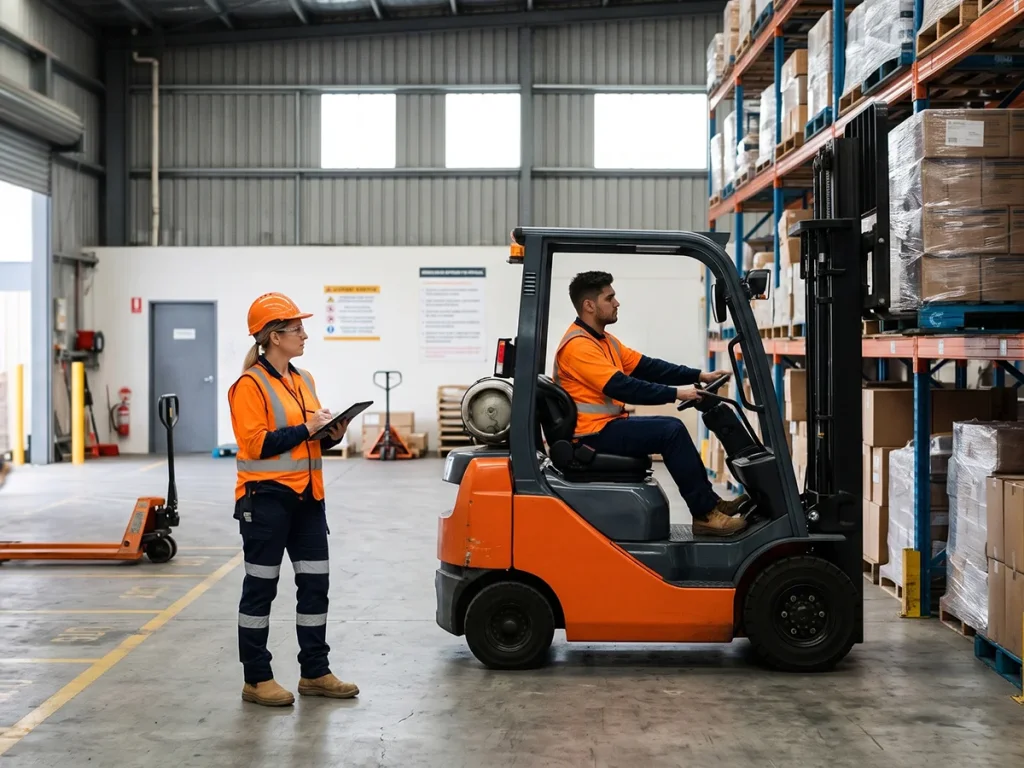
Storepersons receive, check, handle, and despatch goods in stores and warehouses. Skills that carry across these supply chain roles include inventory management, logistics operations, transportation, equipment use, and workplace safety. A machinery licence such as a forklift ticket adds further options.
JSA’s task lists mix technical work, such as operating stock and recording systems, with people work, such as negotiating with suppliers and directing staff. Both kinds of skills matter more as you move up.
Do You Need a Degree for Supply Chain Management?
No, most supply chain managers do not hold a bachelor’s degree. The 2021 Census, reported by JSA, shows 38.4% of supply, distribution, and procurement managers list a bachelor’s degree or higher as their highest qualification. That means about 6 in 10 do not.
The table below shows the full 2021 Census breakdown of highest education level for these managers.
| Highest level of education | Share of managers |
|---|---|
| Postgraduate/graduate diploma or certificate | 14.8% |
| Bachelor degree | 23.6% |
| Advanced diploma/diploma | 15.5% |
| Certificate III/IV | 14.7% |
| Year 12 | 16.2% |
| Year 11 | 3.7% |
| Year 10 and below | 7.7% |
A degree is one route, and vocational qualifications plus experience is another. In the same census data, 30.2% of managers list a diploma or Certificate III/IV as their highest qualification. Our pathway starts with Certificate II if you have no experience, adds licences or moves to Certificate III, and then reaches Certificate IV.
How Do You Become a Supply Chain Manager?
Most people reach manager level by stacking qualifications on top of work experience. Operational roles typically need entry-level qualifications plus any machinery licences, while supervisory and coordinator roles align with Certificate IV and above.
| Step | Qualification | Who it suits or roles it leads to |
|---|---|---|
| 1 | TLI20421 Certificate II in Supply Chain Operations | Newcomers with no experience who want foundational skills |
| 2 | TLI30325 Certificate III in Supply Chain Operations | Warehouse operator, logistics operator, dispatch coordinator, freight handler |
| 3 | TLI40324 Certificate IV in Supply Chain Operations | Dispatch supervisor, distribution centre supervisor, inventory controller, facility manager |
| 4 | Manager, with experience | Supply, distribution, and procurement manager |
Certificate IV units include monitoring a supply chain operation and monitoring supplier performance, which is how supervisors spot supply chain disruptions early. Managers plan, organise, and direct the supply, storage, and distribution of goods, and they set purchasing strategies. They also keep stock at the required level at minimum cost for operational efficiency, negotiate supplier contracts on quality, cost, and delivery, coordinate with cross-functional teams in other departments, and provide leadership to staff.
JSA lists the main sectors employing them as Transport, Postal and Warehousing, Manufacturing, and Wholesale Trade. The ABS Labour Force Survey for 2025 shows 93% of managers work full-time, and the 2021 Census puts their average full-time week at 46 hours.
Certificate II and III supply chain qualifications are listed under Career Start funding, and the Certificate IV under Career Boost. We also offer recognition of prior learning (RPL) for people already working in the industry.
Is There Growing Demand for Supply Chain Professionals?
Yes, and recent employment figures show growth across all aspects of supply chain and logistics. The ABS Labour Force Survey, 2025 four-quarter average, published by JSA, shows annual employment growth of 4,600 for purchasing and supply logistics clerks, 2,500 for managers, 2,400 for storepersons, and 500 for transport and despatch clerks. These are past figures, not forecasts, so they show where growing demand has already appeared for supply chain professionals.
The ABS Labour Force Survey for February 2026 shows where the managers are. Victoria holds 30.3% of them, New South Wales holds 27.7%, and Queensland holds 22.7%. Queensland’s share is the third largest in the country.
The wider Transport, Postal and Warehousing industry employed 754,500 people in February 2026, according to JSA’s industry profile of the ABS Labour Force Survey. That was 15,300 more than a year earlier, a rise of 2.1%.
How Much Do Supply Chain Jobs Pay When Advertised?
Advertised salaries add a second view to the ABS medians. SEEK averages the full-time pay ranges employers post in their job ads, and its October 2026 figures for three roles are below.
| Role | Average advertised salary range |
|---|---|
| Logistics coordinator | $80,000 to $90,000 |
| Warehouse manager | $90,000 to $110,000 |
| Supply chain manager | $140,000 to $160,000 |
Supply chain managers sit at the top of the three, reaching $160,000 at the upper end of the range. Advertised figures show what employers offer, so they can differ from what people are actually paid.
Start Building Your Supply Chain Career with Major
We deliver supply chain qualifications across Queensland and northern New South Wales. Short courses in the area include forklift licence (TLILIC0003), Chain of Responsibility, load and unload goods, and manual handling.
If you are starting from scratch or already working in a warehouse, the right qualification can open the next role on the ladder. Our advisors can show you which one fits.
Call our advisors on 1300 790 822 to talk through your next step.
Supply Chain Career Australia FAQs
Is supply chain a good career path?
Official figures point that way. In the ABS May 2025 survey, the median full-time manager earned $2,834 a week, against $1,852 across all occupations. The ABS 2025 Labour Force Survey also shows employment growth in all four supply chain groups, so the field is adding jobs.
Will AI replace supply chain jobs?
None of the official sources used here forecast how AI will affect these jobs. JSA’s 2025 figures do show employment growing in every supply chain group. Manager tasks such as negotiating supplier contracts and leading staff also rely on people skills.
How long does a Certificate III in Supply Chain Operations take?
The Certificate III in Supply Chain Operations lasts up to 24 months. It runs as a traineeship for learners in paid work, full-time or part-time, who have workplace access, or as self-paced study. You don’t need to meet any formal entry requirements first.
Can your work experience count towards a qualification?
It may. We offer RPL and credit transfer, so industry experience may be recognised, and prior qualifications or statements of attainment may give credit. Qualifications can be delivered onsite or remotely.

Ready to Start or Step Up in Supply Chain Work?
Our advisors can match your current experience to the right supply chain qualification, from Certificate II through to Certificate IV. Tell them where you are now, and they will map out the next step.