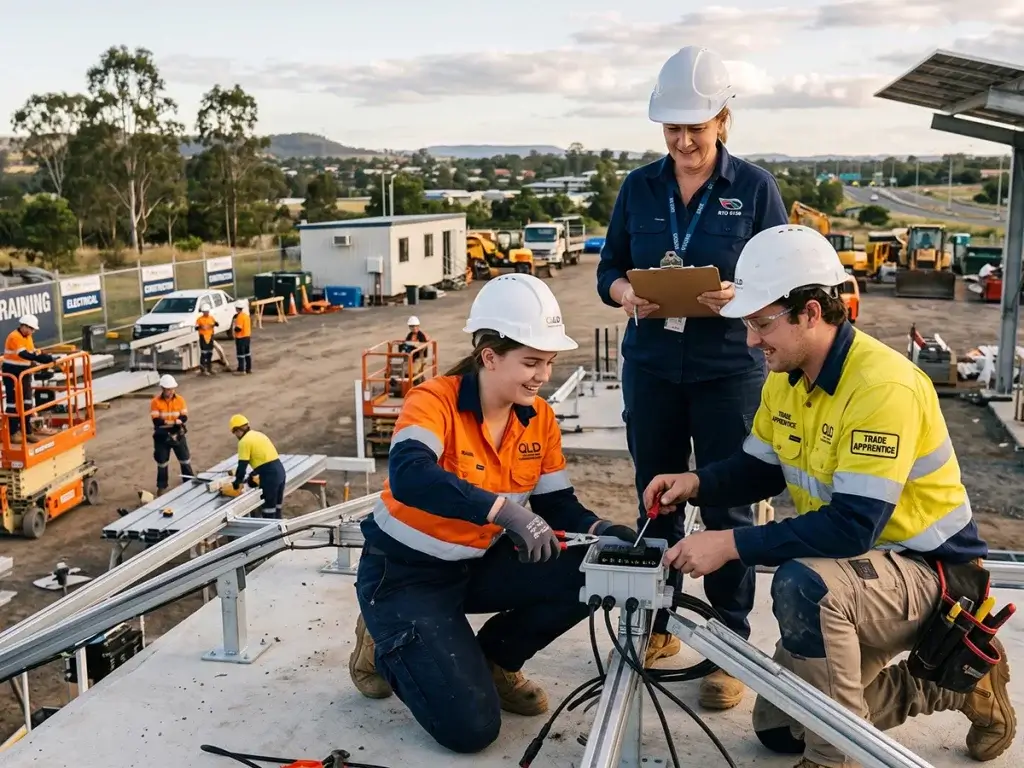
During the COVID-19 Pandemic, working and learning from home became a normality across the world. To help stop the spread of the virus, students and workers started working remotely within the safety of their houses.
Since then, numerous workplaces and education institutions have continued to offer the option to work from home. Working from home can be extremely beneficial for some individuals but in saying that, face to face learning can be beneficial for others.
All individuals learn differently and work more productively in different environments. In the last few years since the pandemic started, millions of articles have been released highlighting the benefits of individuals working and studying from home. Now whilst there are many benefits, now that life is going back to normal, many are asking whether they want to remain at home. If you are questioning what option is best for you, here are six benefits of face-to-face learning that can help you make your decision.

1. Encourages and helps with Social Skills
Humans are social creatures and for a very good reason. Socialising makes us feel a sense of belonging and security which increases our overall mental wellbeing. Face-to-Face learning gives individuals the opportunity to enter a classroom with other students and have that social interaction. Studying from home for some people means sitting in a house on their own which can be detrimental for their mental health.
2. Real-time Interaction
The whole point of studying is to learn things that you don’t already know. So, it’s only human that you are going to have questions and will require help with various elements of your study. Face-to-face learning will ensure that you can receive help at the exact moment you need it. Whilst online learning still involves help through video lessons and email, face-to-face learning means you get the help and explanation at the exact moment you need it.
3. Lack of Distraction
Whilst some individuals feel like they are more productive working from home, many find the familiarly for their home a massive distraction. For example, individuals may feel like they want to get household chores done whilst they are home or perhaps the idea of Netflix and a nap is too much of a temptation to turn down. Avoiding that temptation is easy by going into a physical classroom.
4. Promotes Collaborative Learning
Face-to-face learning teaches students how to work in a team environment and prepares them for when they enter the workplace with other staff members. With classroom learning, students don’t only learn from the theory the teacher is presenting. They learn from other students’ questions and past experiences.
5. Encourages critical thinking
Being in a classroom with other students encourages individuals to engage in live discussions and relevant debates. This type of learning environment gives students other people to bounce ideas off and allows them to question others to ensure their understanding of the concept is correct. Having your ideas challenged helps encourage critical thinking, rather than just reading theory from a laptop.
6. Teaches accountability and Responsibility
With Face-to-face learning, you don’t have the option to say, “I’ll just watch the class and do the work later”. You have a set time to be at class and it’s your responsibility to manage your time correctly to be at that class. Having to physically go into class holds you accountable and teaches students about responsibility. These skills will be essential when entering the workplace.
Working and studying from home has helped thousands of people to access resources that they couldn’t before. Especially individuals living in remote areas. If you are lucky enough to have the choice whether you study online or in-class, we hope this blog helps you decide which option will be best for you. If you still aren’t sure which route to take, contact Major Training today and we can discuss our online and in-class options to help you find the perfect path.
FAQs
What are the main benefits of face-to-face learning compared to online study?
Face-to-face learning gives you direct access to your trainer, real-time feedback, and the ability to ask questions the moment something isn’t clear, which you don’t get at the same level online. It also puts you in a room with other students, which means you can bounce ideas off peers, challenge your thinking and build professional connections that often outlast the course itself. For trade and vocational training, especially, the hands-on component isn’t optional. You can’t learn to operate a forklift, rig a load, or wire a switchboard through a screen. At Major Training, all practical training is delivered face-to-face with industry-experienced trainers and real equipment. Browse available courses on the Major’s full course listing.
Is face-to-face training better for hands-on trade courses in Australia?
Most trade and high-risk work courses require face-to-face training to teach practical components. Licensing bodies like WHS Queensland mandate that practical assessments for High Risk Work Licences are completed in person with an accredited assessor. You can’t sit a forklift driving test, a dogging practical, or a rigging assessment online. Beyond the legal requirement, there’s a real skills benefit to training in person, as you develop muscle memory, spatial awareness, and situational judgement that simply doesn’t come from watching videos. According to research published in PLOS ONE, face-to-face learning produces faster and more effective skill acquisition, particularly for hands-on tasks.
Does learning in a classroom help with focus and motivation compared to studying at home?
For many people, yes. Studying at home comes with a long list of distractions that a classroom environment removes entirely. When you’re sitting in a training room with a trainer in front of you and other students around you, there’s a natural structure and social accountability that keeps you focused. Many people find they retain more information, stay on track more easily, and complete their training faster when they’re learning face-to-face. It’s not that online learning doesn’t work (it works well for the right person and the right content), but for trade training where practical skills are the end goal, the classroom and worksite environment is hard to replicate at home.
How does face-to-face training help with networking in the construction and trades industry?
The connections you make during training often matter as much as the qualification itself. When you train alongside other people in your industry, you’re building relationships with future colleagues, potential employers, and professional contacts before you’ve even finished your course. Many people find their first job, get a referral, or pick up a labour hire contact through someone they met during trade training. The construction and civil industries in Australia are relationship-driven, and who you know matters. This means face-to-face training is one of the best early opportunities to start building that network. Major Training’s apprenticeships and traineeships are all delivered in person for exactly this reason.
Can I still ask questions and get support during face-to-face training if I’m struggling?
Absolutely, and that’s one of the biggest advantages. The moment you don’t understand something in a face-to-face session, you can raise your hand and get an explanation on the spot, in plain language, from a trainer who can demonstrate it physically if needed. That’s a very different experience from emailing a question to an online support team and waiting for a reply. Major Training maintains a 95% pass rate across its courses, and a significant part of that is down to the quality of in-person trainer support. Students have access to a range of support options throughout their training, and trainers are industry professionals with real on-site experience, not just teaching credentials.
Does Major Training offer face-to-face courses across Queensland and NSW?
Yes, Major Training delivers face-to-face training across multiple locations in Queensland and NSW. Queensland campuses include Yatala/Ormeau, Virginia (Brisbane Northside), Morayfield/Caboolture, and Ipswich, with on-site delivery also available if you need training brought to your workplace. In NSW, Major Training’s Warabrook campus in Newcastle delivers apprenticeship training for the Hunter Region. For most trade, high-risk and construction courses, training is conducted in purpose-built facilities with real equipment to ensure you’re genuinely job-ready when you finish. Check current course dates and locations on the Major’s course schedule.

In-Person Training from Industry Experts
Browse Major’s face-to-face courses across Queensland and NSW and find one near you.