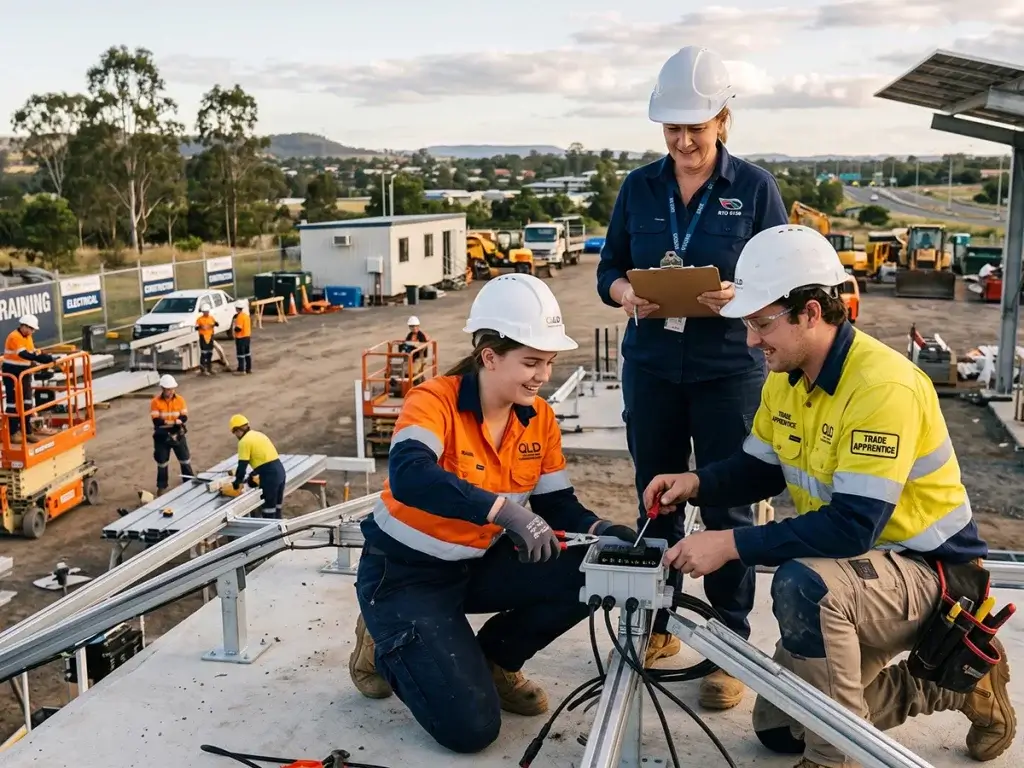
Thinking about a career in the electrical industry? It’s a solid choice. Whether you want to work on residential upgrades or big industrial projects, there’s plenty of work going.
If you’re asking how to become an electrician, the path is straightforward but requires commitment. You need to complete an electrical apprenticeship and get your Certificate III in Electrotechnology Electrician.
The industry needs skilled tradespeople. You need to be ready to install, maintain, and repair electrical systems, equipment, and electrical appliances. Safety is key on a risky worksite. You have to stick to safety regulations and safe working practices to keep yourself and your mates safe.
Types of Electricians
The electrical trade is versatile. Before you start, it helps to know what an electrician does across different sectors. You have options in the construction industry and beyond:
Residential Electricians: You’ll install and fix electrical setups in homes. This involves planning wiring systems, installing power points, and managing electrical installations for renovations or new builds.
Commercial Electricians: You work in business setups like office blocks or shopping centres. It’s about handling diverse power sources, data cabling, and keeping businesses powered up.
Industrial Electricians: If you like industrial settings and large machinery, this is for you. You’ll manage complex electrical networks and PLCs (Programmable Logic Controllers) to keep production lines running.
Master Electricians: These are the pros with advanced education and industry experience. You’ll supervise others and run the big projects.
The Essential Qualification: Certificate III
To get your licence in Australia, the non-negotiable requirement is the Certificate III in Electrotechnology Electrician.
This isn’t just about reading textbooks. It is a practical course that teaches you the core skills you need on the tools. You will cover:
Circuit Analysis: Understanding how current, voltage, and resistance work.
Technical Drawings: Learning to read and interpret electrical blueprints and diagrams.
Installation: How to select and install wiring systems and accessories correctly.
Troubleshooting: The art of fault finding to fix electrical malfunctions safely.
You usually finish this certificate during your electrical apprenticeship. It combines theoretical knowledge with real on the job training, so you earn while you learn.

The Pathway: Apprenticeships and Pre-Apprenticeships
Starting with a Pre-Apprenticeship
Want to stand out to employers? A Certificate II in Electrotechnology (Career Start) is a great first step. This pre apprenticeship course gives you the basic skills, hand tool experience, and safety know-how you need. It shows a boss you are serious and ready to work.
The Reality of Being an Apprentice
Electrical apprentices are the backbone of the workforce. You help licensed electricians and learn the trade through hands-on workplace experience.
If you’re wondering how long an electrician apprenticeship is in Australia, it typically takes four years. Be prepared for hard work. It’s not just wiring switchboards; you’ll be pulling cables, digging trenches, and crawling through roof spaces. You’ll work under a registered electrical contractor or licensed tradie, gaining the practical logbook hours you need for licensing.
Getting Licensed: The Capstone Assessment
Finishing your apprenticeship isn’t the end. To become a fully qualified electrician, you must pass the “Capstone” assessment. This is a rigorous final practical test that proves you can work safely and independently. It checks everything from your installation skills to your testing and fault-finding ability. Once you pass this, you can apply for your electrical licence.
Electrical Installation and Safety
You need to understand electrical circuits and electrical installations inside out to do the job right.
Safe working practices aren’t optional. You must follow the guidelines to stop electrical faults. Electrical equipment has to be installed correctly to prevent accidents. That’s why regular safety training is essential throughout your career.

Career Path and Salary
There are heaps of job opportunities out there. There is high demand for sparkies in various settings, like mining and renewable energy. The construction industry is a massive employer right now.
You can also upskill with a Certificate IV or move into project management. Whether you want to climb the ladder or start your own business, the options are there. The pay is good, too. The average salary for electricians in Australia is competitive, often over $94,000 a year, with experienced tradies earning significantly more in the mines or as contractors.
Future of the Electrical Industry
The trade is evolving fast. It’s not just about wiring lights anymore. The push for greener energy and smarter homes means the industry is booming, and the numbers back it up.
Massive Shortage: To hit our renewable energy targets, Australia needs 32,000 more electricians by 2030 (Source: Jobs and Skills Australia).
Workforce Growth: The clean energy workforce needs to double by 2029 to keep up with demand.
Government Targets: With a national target of 82% renewable energy by 2030, the rollout of solar and battery storage is ramping up fast.
EVs are Taking Over Electric vehicles aren’t a fad; they are the future.
Rising Sales: EV sales in Australia have surged, now making up over 12.1% of all new car sales (Source: Electric Vehicle Council).
Infrastructure Needs: Every new EV needs power. That means a massive, ongoing demand for installing residential and commercial charging stations.
Prefer the Workshop? It’s not just the grid that’s changing. As cars get smarter and more electric, the demand for skilled Auto Electricians is skyrocketing. If you’d rather work on engines and vehicle tech than building sites, check out the Certificate III in Automotive Electrical Technology.
Stay Sharp, Stay Employed New tech means new gear. If you’re willing to learn and adapt to sustainable practices, you won’t just have a job; you’ll have a career that’s future-proof.

Why Choose an Electrical Career?
You want a career with a future, not just a job. The electrical trade offers solid pay, real stability, and the chance to build something tangible with your hands.
You Have the Advantage: With a recognised skills shortage, qualified sparkies are in high demand. That means you have the power to choose where you work and who you work for.
Variety and Growth: Boredom isn’t an option. You can choose to specialise in industrial settings, mining, or residential work. Whether you want to climb the ladder or start your own business, the pathway is wide open.
How to Get Started
Ready to get on the tools? It starts with an apprenticeship and a Certificate III in Electrotechnology Electrician. Whether you’re fresh out of school or using prior learning to recognise previous experience, we can help you take the next step.
Ready to find out more? Call 1300 790 822 or fill out the form below to get your start with Major Training today.
Frequently Asked Questions
What qualifications do you need to become a licensed electrician in Australia?
The non-negotiable qualification is the Certificate III in Electrotechnology Electrician (UEE30820). This is a nationally recognised trade qualification that covers electrical theory, wiring, safety protocols, and practical installation across residential, commercial and industrial settings. You earn it through a four-year apprenticeship, working under a licensed electrical contractor while training with a Registered Training Organisation (RTO) like Major Training. Once you’ve completed the qualification and passed the Capstone assessment, you can apply for your electrical licence through your state’s licensing body. Enrol in Major’s Electrical Apprenticeship (UEE30820) to get started.
Do I need a Certificate II before starting an electrical apprenticeship?
It’s not mandatory, but completing a Certificate II in Electrotechnology (Career Start) (UEE22020) before your apprenticeship is a smart move. It acts as a pre-apprenticeship, giving you a solid grounding in the basics of electrical work and showing employers you’re serious about the trade. It can also reduce some of the classroom learning time in your Cert III through Recognition of Prior Learning (RPL). Think of it as a head start. You’ll walk into your apprenticeship more confident and better prepared than most other applicants.
How long does it take to become a fully qualified electrician in Australia?
It typically takes four years to complete your electrical apprenticeship in Australia. During that time, you’re working on real jobs under a licensed electrical contractor, logging the practical hours you need for licensing, and completing structured training with your RTO. Once you finish the four years, you’ll need to pass the Capstone assessment, a rigorous final practical test covering installation, testing, and fault-finding, before you can apply for your electrical licence. According to Jobs and Skills Australia, electricians are among the most in-demand trades in the country, so it’s a time well invested.
Do licensing requirements differ between states in Australia?
Yes, while the Certificate III in Electrotechnology Electrician is a nationally recognised qualification, your electrical licence is issued by your state or territory’s licensing authority. In Queensland, that’s the Queensland Building and Construction Commission (QBCC). In NSW, it’s Fair Trading. Each state has its own process for applying, and requirements around supervised hours and assessments can vary. The good news is that your Cert III is valid everywhere in Australia, so your core qualification is fully portable, even if the licensing process differs. Check out Major’s Electrotechnology courses to see what’s available in your state.
Can I become an electrician if I already have experience in another trade?
Yes, you can. If you’ve got relevant experience in a related trade or industry, you may be eligible for Recognition of Prior Learning (RPL), which can reduce the amount of classroom training you need to complete the Cert III. It won’t skip the practical requirements entirely, as you’ll still need to log the necessary hours, but it can shorten the overall timeline. It’s worth talking to an RTO like Major Training to find out exactly what your existing experience covers and how it applies. Visit our RPL page to find out more.
Can I start my own electrical business once I’m qualified?
Absolutely. Once you’re trade-qualified and hold an electrical contractor licence, you can run your own business and hire your own team. Many electricians go down this path after spending a few years working under another contractor and building up their experience and client base. To operate as a contractor, you’ll need a separate contractor licence on top of your electrician’s licence. The process for getting this also varies by state. It’s a realistic and well-trodden path in the trade.
Is being an electrician a good career choice in Australia right now?
Yes, it’s one of the most in-demand trades in the country. Electricians are consistently listed among the top occupations with skills shortages across Australia, driven by construction activity, the rollout of renewable energy infrastructure, and the ongoing electrification of homes and businesses. The trade also offers strong earning potential, genuine job security, and clear pathways into specialised areas like solar, automation, and data cabling. If you’re weighing up your options, it’s hard to look past it.
Contact Us

Start Your Electrician Career Today
Find out what’s involved in Major’s four-year Electrical Apprenticeship and how to apply.