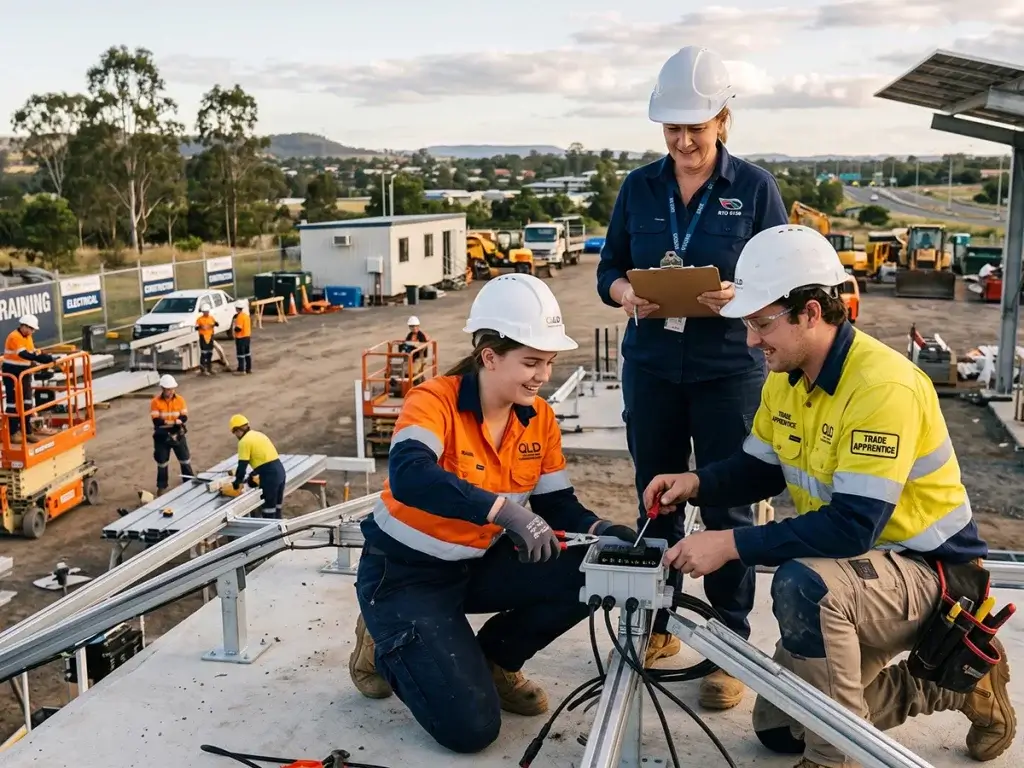
If you’re working around heavy machinery or dangerous equipment in Queensland, chances are you already have, or need, a High Risk Work (HRW) licence. But when your licence is due to expire, it’s important to stay ahead of the game.
Whether you’re operating a forklift, managing scaffolding, or using a vehicle loading crane, renewing your licence is key to staying compliant and keeping your job.
What Is a High Risk Work (HRW) Licence?
A High Risk Work Licence is a mandatory requirement in Australia for anyone performing high-risk tasks. It applies to roles involving:
Cranes and hoists
Scaffolding and rigging
Elevated work platforms (EWPs)
Forklift trucks
Pressure equipment
There are over 30 licence classes, each tied to a specific type of high-risk work.
Who Needs One?
You’ll need a HRW licence if your job includes:
Operating a forklift, order picker, or gantry crane
Performing dogging or rigging
Erecting scaffolding (basic, intermediate, or advanced)
Using boom lifts over 11 metres or materials hoists
You must be at least 18 years old and complete training with a Registered Training Organisation (RTO) before applying.
When Does It Expire?
Your HRW licence is valid for five years. A renewal notice is sent 4–6 weeks before the expiry date, but even if you don’t receive it, it’s your responsibility to keep track.
If your licence lapses, you can’t legally perform high-risk work. You’ll need to renew it as soon as possible to avoid penalties or job disruptions.
How to Renew a High Risk Work Licence in QLD
You can renew your HRW licence online via the WorkSafe QLD portal.
What You’ll Need:
Current HRW licence card
Queensland driver’s licence or photo ID
Renewal notice (if received)
Debit or credit card for payment
Renewal Steps:
Check your expiry date
Log into the WorkSafe QLD portal
Enter your licence number or renewal code
Confirm your contact and postal details
Submit your application and payment
Keep the confirmation receipt
Your new licence should arrive within 21 days.
HRW Licence Classes Offered by Major Training
Major Training provides hands-on, practical training to help you meet HRW requirements. Here are the key licence types we deliver:
Cranes and Hoists
Operating a crane requires precision and strict adherence to safety. Our courses cover various capacities to get you site-ready.
- TLILIC0021: Licence to operate a slewing mobile crane (up to 100 tonne)
- TLILIC0023: Licence to operate a slewing mobile crane (up to 60 tonne)
- TLILIC0022: Licence to operate a slewing mobile crane (up to 20 tonne)
- TLILIC0040: Conduct Non-Slewing Crane Operations
- TLILIC0024: Licence to operate a vehicle loading crane (capacity 10 metre tonnes and above)
Scaffolding Work
From basic setups to complex suspended scaffolds, we offer training for every level of experience.
- CPCCLSF2001: Licence to erect, alter and dismantle scaffolding (Basic Level)
- CPCCLSF3001: Licence to erect, alter and dismantle scaffolding (Intermediate Level)
- CPCCLSF4001: Licence to erect, alter and dismantle scaffolding (Advanced Level)
Dogging and Rigging
These are essential skills for moving loads safely on any construction site.
- CPCCLDG3001: Licence to perform dogging
- CPCCLRG3001: Licence to perform rigging (Basic Level)
- CPCCLRG3002: Licence to perform rigging (Intermediate Level)
Elevated Work Platforms (EWP)
- These platforms can be telescoping, hinged, articulated, or a combination of these mechanisms.
Flexible Delivery, Funding & Locations
Train with Major at one of our locations across Queensland:
We also offer onsite training for businesses.
Do You Need to Retrain?
Not if your licence is current and you’re only renewing. However, if it has expired for a long period or you’re adding a new class (e.g., moving from basic to intermediate rigging), you’ll need to complete fresh training with a qualified RTO.
Flexible Delivery & Locations
Train at one of our Queensland sites:
Yatala (Gold Coast)
Morayfield (Caboolture)
Virginia (Brisbane)
Dinmore (Ipswich)
Onsite training available for businesses
Funding & Payment Options
Major Training offers multiple payment and funding solutions, including:
Construction Skills Queensland (CSQ) funding
BERT Training Fund
Study Now, Pay Later plans
Why Licence Renewal Matters
Renewing your HRW licence ensures:
You meet WHS compliance standards
You remain eligible to work on-site
You’re covered by workplace insurance
You avoid potential fines or penalties
Keeping your licence current isn’t just a formality — it’s about protecting yourself, your team, and your reputation.
How Major Training Supports Licence Renewal
Complete Training Before Applying
To get a licence you must first complete relevant training with a Registered Training Organisation (RTO) like Major Training. We deliver practical, real-world learning that ensures you’re ready to perform high risk work confidently.
Funding options include:
- Construction Skills Queensland (CSQ) Funding
- BERT Training Fund
- Study Now, Pay Later flexible payments
Registered Training Organisation (RTO) Standards
Major Training is a trusted RTO meeting industry standards for relevant training and safety compliance. We help you:
- Meet your legal licence application requirements
- Prepare all required documents
- Stay up to date with risk work legislation
Compliance and Safety: Why Renewal Matters
Holding a current HRW licence ensures you:
- Meet QLD’s compliance and safety standards
- Avoid fines or penalties for working unlicensed
- Are covered by workplace insurance and WHS policies
Renewing your licence is not just about ticking a box — it’s about protecting yourself and your crew.
Frequently Asked Questions (FAQ)
How often do I need to renew my High Risk Work Licence in Queensland?
Your High Risk Work Licence (HRWL) in Queensland is valid for five years and must be renewed before it expires. Workplace Health and Safety Queensland (WHSQ) will send a renewal notice by post and email four to six weeks before your expiry date, but it is your legal responsibility to keep your contact details current with WHSQ at all times, within 14 days of any change. Don’t rely solely on receiving a reminder. If your notice is sent to an old address because your details were out of date, you can still be penalised for an expired licence.
What happens if my High Risk Work Licence expires in Queensland?
If your HRWL expires and you continue to perform high risk work, you’re operating illegally under Queensland’s Work Health and Safety Regulation 2011, which can result in serious penalties for both you and your employer. You can apply to renew an expired licence up to 12 months after the expiry date, but critically, you can’t legally perform the high risk work during that gap. If you apply for renewal after the expiry date and it hasn’t yet been approved, your licence isn’t current, and you must stop work until approval is granted. Don’t wait to renew before the expiry date to avoid any interruption.
How do I renew my High Risk Work Licence in Queensland?
Renewal is done entirely online through WHSQ’s High Risk Work Licence Online Services portal. You will need your HRW licence number, the renewal notice number (found in the top left corner of your renewal notice), and your Queensland Digital Identity (QDI) linked to a customer reference number (CRN) from a Transport and Main Roads (TMR)-issued card, such as a driver’s licence. Payment is made by credit card via BPOINT. Note that as of January 2026, BPAY is no longer accepted. Australia Post and TMR service centres don’t process HRWL renewals. If your application and payment are submitted before or on the expiry date, your licence remains current while being processed.
Do I need to complete additional training to renew my High Risk Work Licence?
WHSQ requires you to have maintained your competency to renew your HRWL. They won’t renew a licence if competency has not been maintained. In practice, this means you should have been actively using the skills covered by your licence class throughout the five-year period. WHSQ may request additional evidence or direct you to be reassessed if they have reason to believe your competency may have lapsed. If you are required to be reassessed, you must do so with a registered training organisation (RTO) like Major Training before your renewal can be approved. Proactively completing a refresher or Verification of Competency (VOC) assessment before renewal is always a sound approach.
Which High Risk Work Licence classes does Major Training support in Queensland?
Major Training Group delivers training and assessment for a wide range of HRWL classes across Queensland, including Dogging, Rigging (Basic, Intermediate, and Advanced), Scaffolding (Basic and Intermediate), Elevated Work Platform (EWP) over 11 metres, Slewing and Non-Slewing Crane Licences, Vehicle-Loading Crane Licences, and Forklift Licences. Training is available at campuses in Yatala (Gold Coast), Ipswich (Dinmore), Morayfield/Caboolture, Cairns, and regional or on-site locations across Queensland. Call Major on 1300 790 822 to discuss which classes you need and to book your assessment.
Can I renew a High Risk Work Licence from another state if I’ve moved to Queensland?
Yes, holders of interstate HRWLs who move to Queensland can renew their licence in Queensland, provided the licence meets WHSQ’s eligibility criteria. Your interstate licence must be a photographic licence. Non-photographic interstate licences may not be eligible for renewal in Queensland, so it’s worth calling WHSQ on 1300 362 128 before lodging an application. Similarly, Queensland HRWL holders who have moved interstate can renew their licence either in Queensland or in their new state or territory, depending on which is more practical for their circumstances.
Contact Us
Renew Your High Risk Licence Now
Check upcoming assessment dates for HRWL classes across Queensland, and book before your expiry date.